
Warehouse management
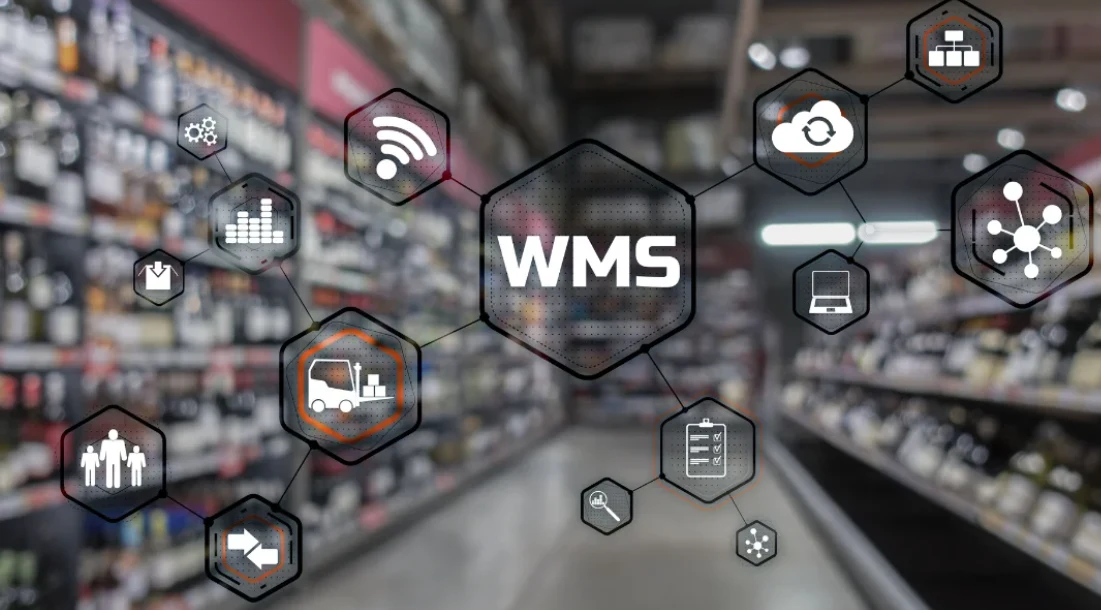
WMS is a system that runs a warehouse at the level of a specific bin and a specific unit of goods. It knows not only how much of something there is, but where exactly it sits, when it arrived, which batch it belongs to and who touched it last. The warehouse worker stops searching from memory, and the manager gets a stock balance that can be trusted without a recount.
What it is
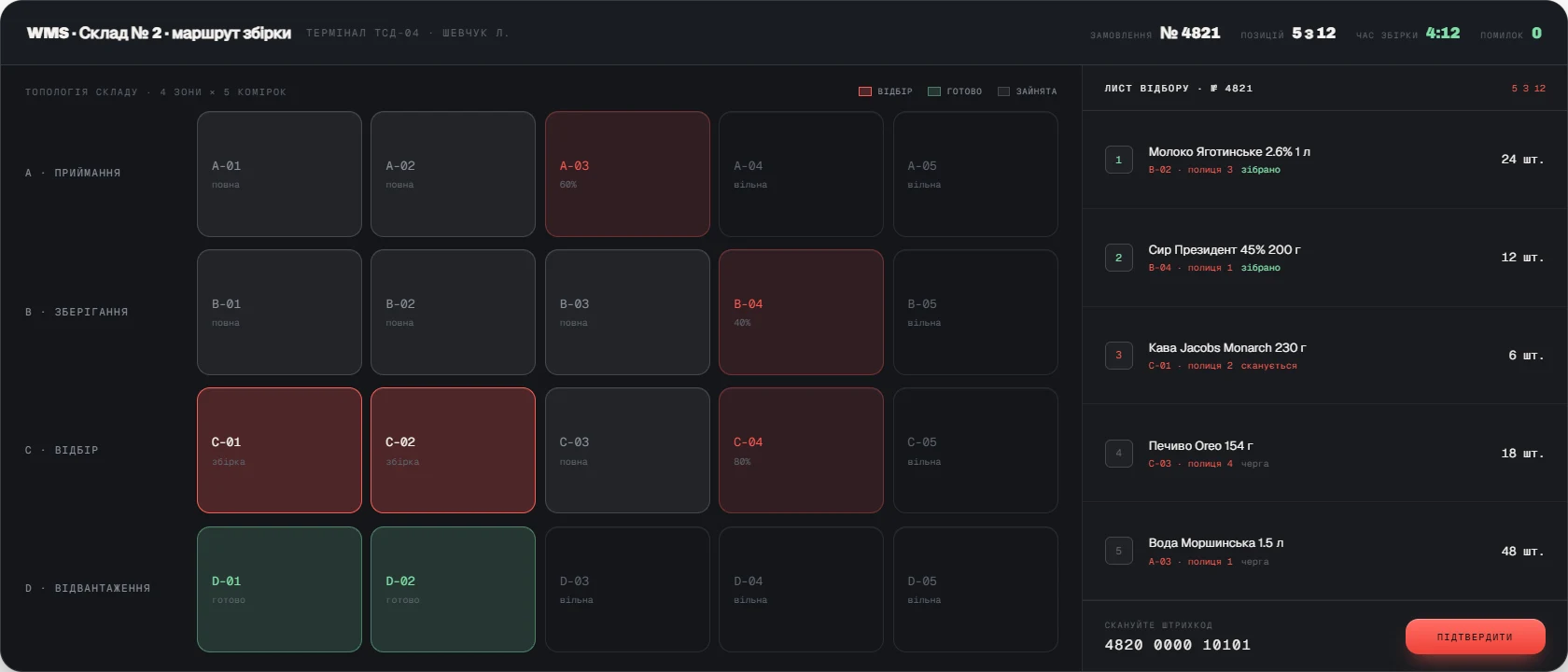
A Warehouse Management System is built on two principles: bin storage and barcoding. Every location in the warehouse has an address, every unit of goods has a label. The system tells the worker where to put an incoming batch and which bin to pick from when assembling an order, taking expiry dates and rotation rules into account. Work is done from a handheld terminal, so the record appears in the system at the moment of the physical action, not in the evening from scribbled notes.
This changes the very nature of stocktaking. Instead of shutting the warehouse down once a quarter, a partial count of individual zones becomes possible during work: the system compares fact against records for specific addresses and shows the discrepancies with the person responsible attached. A completed count cannot be edited after the fact — which is exactly what makes its result hold up as evidence.
Why you need it
WMS is needed once a warehouse has grown to the point where human memory stopped being reliable bookkeeping.
- Goods have to be hunted for
The picker knows it is “somewhere in that row” and spends more time searching than picking.
- Picking errors
The client receives the wrong item or the wrong quantity, and the company pays for the return twice.
- The balance does not match reality
Every stocktake produces a discrepancy whose cause cannot be established.
- Write-offs with no explanation
Expired goods are found on the shelf rather than in a report warning that the date is approaching.
What the system owns
WMS owns the physical movement of goods inside the warehouse and the accuracy of the balances.
- Bin storage
Warehouse topology: zones, racks, bins, placement rules and limits on weight and dimensions.
- Receiving and putaway
Checking against the order, recording discrepancies, printing labels, suggesting a storage location.
- Picking and dispatch
Picking route, scanner verification, assembly, packing, generating the documents.
- Batches, series, expiry dates
Batch tracking, shelf-life control, FIFO and FEFO rules.
- Stocktaking
Full and partial counts without shutting the warehouse, with an unalterable result and a named owner.
- ERP integration
Every movement appears in the books immediately, so stock shown in sales is always current.
What implementation delivers
WMS cuts the time it takes to pick an order, sharply reduces errors and makes the balance trustworthy without a quarterly shutdown. Discrepancies stop being a mystery: each one has an address, a time and a person responsible. We roll WMS out together with the hardware setup — terminals, scanners and label printers.